Subscribe

Subscriber Email *
Title *
First Name *
Last Name *
Job Title *
Company Name *
Country
Areas you have interest
General CCS News and Updates
Capture
Storage
Transportation
Utilisation
CCS Projects
Economics
Legal and Regulatory
Policy
Community Engagement
DAC or BECCS
I agree to the Global CCS Institute Privacy Policy.

Carbon management
at COP31

A guide for tracking international carbon management policy, deployment, negotiations, and partnerships in Antalya

Overview

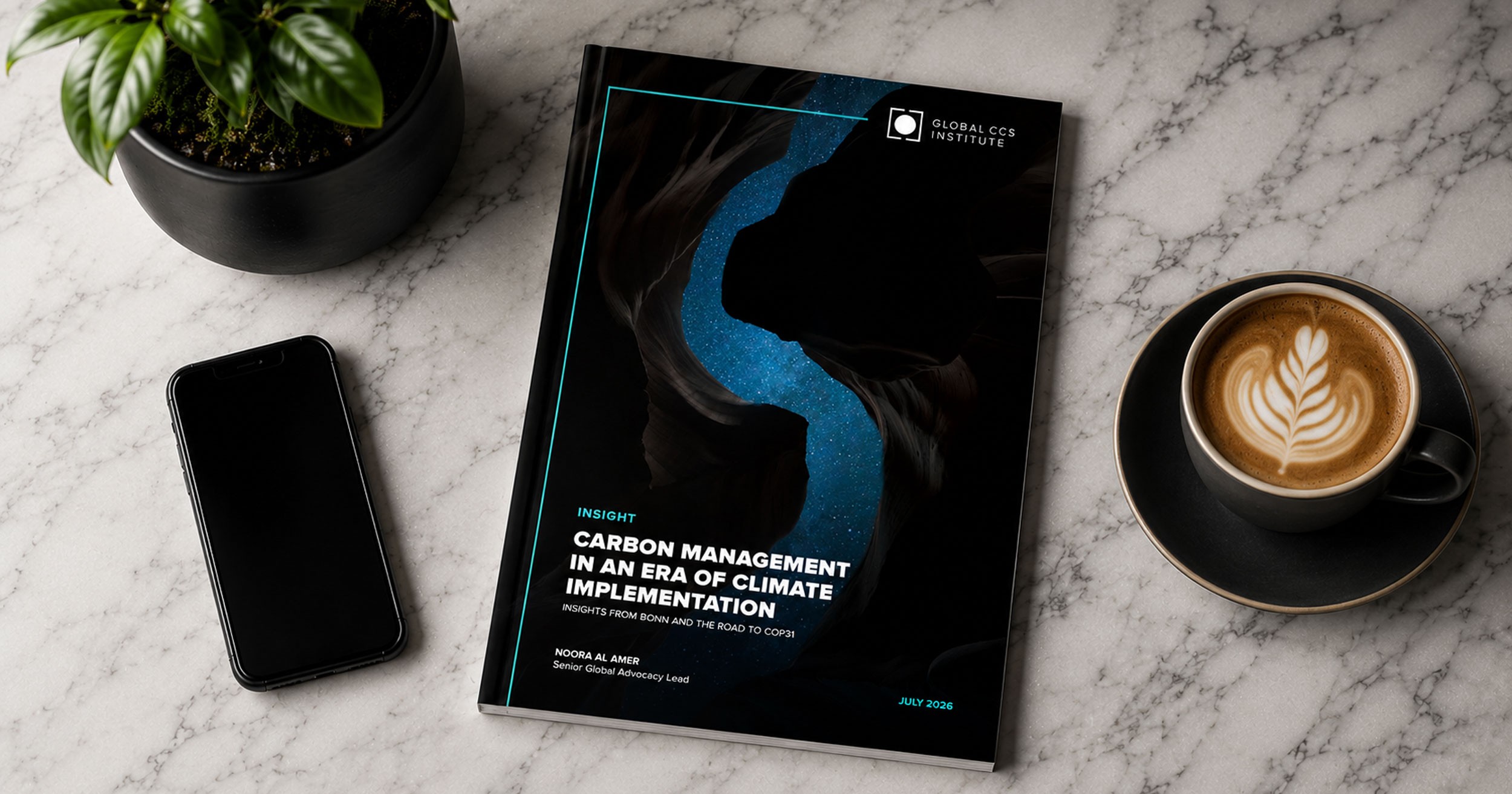
At COP31, the priority is project delivery, commercial deployment, and infrastructure scaling. Guided by a dual arrangement with Türkiye holding the presidency and leading the Action Agenda while Australia leads the formal negotiations, this “Implementation COP” is designed to turn high level commitments into steel-in-the-ground projects.

In Antalya, discussions will examine how governments integrate carbon management into their next round of Nationally Determined Contributions (NDCs), frame the distinct roles for CCS and carbon dioxide removal in negotiated text, and shape the international carbon markets under Article 6. This webpage provides a focused way to follow these key developments.

Carbon Management events in the run up to COP31

Key Climate Action Tracks

What GCCSI is watching in Antalya

Industrial delivery

The mitigation work programme (MWP) supports increased climate ambition and implementation, including investment and technology needs. The 2026 theme for the MWP is enabling mitigation ambition and implementation in industries, drawing on national and regional experiences.

Finance and projects

Developing countries often cite technology access, capacity building and finance as essential for industrial decarbonisation. The Technology Mechanism and GCF can support knowledge sharing, enabling conditions and carbon management project development.

NDCs and GST2

Carbon management is increasingly reflected in NDCs and was recognised in the GST1 outcome, the UAE Consensus, through reference to “abatement and removal technologies”, including CCUS, particularly in hard-to-abate sectors. This provides a foundation for GST2, which kicks off at COP31 and concludes at COP33.

Just transition and trade

The just transition work programme examines the social and economic impacts of climate action, while trade is emerging as a new area of discussion at this year’s mid-year negotiations in Bonn.

Article 6 and MRV

Article 6 is moving into implementation, with carbon market infrastructure and reporting systems being operationalised. MRV is also transitioning to the Paris Agreement’s Enhanced Transparency Framework, strengthening emissions reporting and tracking of NDC progress.

Action agenda and partnerships

Action agenda and partnerships: The Global Climate Action Agenda and the renewed Marrakech Partnership are helping translate climate commitments into implementation by mobilising voluntary action and bringing governments, businesses and other stakeholders together around practical delivery.

Practical guidance

COP Navigation Guide

Know where decisions happen

Formal negotiating sessions produce the UNFCCC decisions. Side events, pavilions, and Action Agenda sessions offer useful context and networking but hold no formal decision making.

Follow the negotiating text

Draft text is the clearest indicator of progress. Square brackets [ … ] mark unresolved language, while competing options can show differences in Party positions.

Track how discussions evolve

Negotiations move from contact groups into smaller informal consultations as Parties work through disagreements. Format changes signal the maturity of an emerging text.

Look for implementation signals

Look beyond explicit references to CCS or carbon dioxide removal. Watch for text on CO₂ transport and storage infrastructure, MRV, methodologies, and finance.

Follow negotiating blocs

Parties often negotiate through unified blocs. Track the positions of party groupings  such as AOSIS, the LDC Group, the African Group, LMDCs, the Arab Group, and the EU to anticipate individual country interventions.

Engage outside formal sessions

Bilateral meetings, technical events, and informal discussions can reveal emerging national priorities and opportunities for collaboration before they appear in formal text.

From Recognition to Delivery

Priority actions for carbon management

  • Turn NDCs into concrete sector plans and project pipelines.
  • Inform GST2 and mitigation discussions with implementation evidence.
  • Finalise Article 6 accounting and MRV frameworks.
  • Connect technical assistance directly with project preparation and finance.
  • Develop shared CO₂ transport and storage infrastructure networks.
  • Increase technical and financial support for project development in emerging and developing economies.
  • Account for local jobs, industrial competitiveness, safeguards, and national circumstances.
  • Keep carbon management communications specific, measurable, and evidence-based.
  • Connect formal negotiations with practical implementation initiatives.
Read the briefing

Institute position

Key messages for carbon management

Electrification must reduce emissions

Its climate impact depends on the emissions intensity and firmness of the power system supply.

Dive deeper

Industry needs a portfolio of solutions

CCS can address process emissions and other hard-to-abate emissions in sectors such as cement, steel, and chemicals.

Dive deeper

Climate stabilisation requires carbon removal

Engineered carbon dioxide removal is necessary to counterbalance residual emissions and address carbon in sectors such as aviation, shipping, and agriculture.

Dive deeper

Deployment depends on public confidence

Strong regulation, monitoring, transparent evidence, and meaningful engagement are essential.

Dive deeper
Expertise at COP 31

Meet the GCCSI Experts

Media and meeting enquiries

Communications will connect you with the most relevant available expert.

Contact us

Reference

Glossary of key terms

A - C
Article 6
A provision of the Paris Agreement that enables countries to cooperate voluntarily in meeting their climate targets, including through international carbon markets.
Bankability
The extent to which a project has the technical, commercial, regulatory and financial conditions required to attract investment.
Carbon capture, utilisation and storage (CCUS)
A process in which captured carbon dioxide is either used in products or processes, or permanently stored.
Carbon capture and storage (CCS)
A process in which carbon dioxide is captured from an industrial or energy source, transported and permanently stored in suitable geological formations.
Carbon dioxide removal (CDR)
The removal of carbon dioxide from the atmosphere followed by its durable storage.
Carbon management
A broad term for approaches that capture, transport, use, store or remove carbon dioxide to reduce emissions or deliver durable carbon removals.
Climate finance
Public or private finance used to support activities that reduce greenhouse gas emissions or strengthen resilience to climate change, including finance provided or mobilised to support developing countries in implementing their climate commitments.
Conference of the Parties (COP)
The governing body of the UN Framework Convention on Climate Change, which meets annually to advance international climate action.
CO₂ transport and storage network
Shared infrastructure used to move captured carbon dioxide from one or more sources to sites where it can be permanently stored.
G - N
Global Stocktake (GST)
A five-yearly assessment under the Paris Agreement of collective progress towards its long-term climate goals.
Hard-to-abate
Describing sectors or emissions that are particularly difficult to eliminate because of technical, economic or process-related constraints.
Intergovernmental Panel on Climate Change (IPCC)
The United Nations body responsible for assessing scientific knowledge on climate change, including its causes, impacts, risks and options for mitigation and adaptation
Monitoring, reporting and verification (MRV)
The systems and procedures used to measure, report and verify emissions, emissions reductions, carbon dioxide storage or removals.
Nationally Determined Contribution (NDC)
A national climate plan submitted under the Paris Agreement setting out a country’s targets and actions for reducing emissions and adapting to climate change.
P - S
Paris Agreement
The international climate agreement adopted in 2015 with the goal of holding the increase in global average temperature to well below 2°C and pursuing efforts to limit it to 1.5°C.
Process emissions
Greenhouse gas emissions produced by the chemical or physical processes used to manufacture materials, rather than by the combustion of fuel alone.
SBI
The Subsidiary Body for Implementation, which supports the implementation, reporting and review of UNFCCC and Paris Agreement commitments.
SBSTA
The Subsidiary Body for Scientific and Technological Advice, which supports the UNFCCC process on scientific, technical and methodological matters.
T - U
UNFCCC
The United Nations Framework Convention on Climate Change, the international treaty that provides the foundation for global climate negotiations.

Stay connected. Have an impact.

Be part of the global CCS conversation. Stay informed, share ideas, and help shape the future of carbon management through collaboration and action.

Members Portal Login

Not a member yet?   Find out about membership

Login with Microsoft

Access Free Report

Please enter your details below to begin the download.

Name(Required)
Country(Required)

For information about the Global CCS Institute's privacy policy, click here.